
 5.0 STAR GOOGLE RATING
A New Philosophy in Aesthetic Dentistry
Beyond Traditional Veneers
For decades, cosmetic dentistry has been forced to choose between three competing priorities:
- Strength
- Aesthetics
- Intervention/preparation
Historically, these have been mutually exclusive. It has not been possible to reconcile all three factors due to limitations of aesthetics and/or strength in small cross sectional thickness.
High-strength ceramics such as leucite, cerinate, lithium disilicate and zirconia-based ceramics possess exceptional compressive and tensile strength, making them ideal for long-term function. However, they can sometimes lack the optical trueness found in natural enamel. Conversely, traditional feldspathic porcelain remains the benchmark for reproducing nature because of its translucency, fluorescence, opalescence and depth, yet by itself it is inherently more fragile.
Ceramic Bonding represents a modern evolution that combines the advantages of both worlds rather than forcing a compromise. It has been developed by in collaboration with our clinicians at Marylebone Smile Clinic, Dental Ceramists across the UK and Italy as well as material scientists from Cendres Mateux, General Chemicals (GC), Creation, Noritake and Ivoclar Vivadent.
The Principle
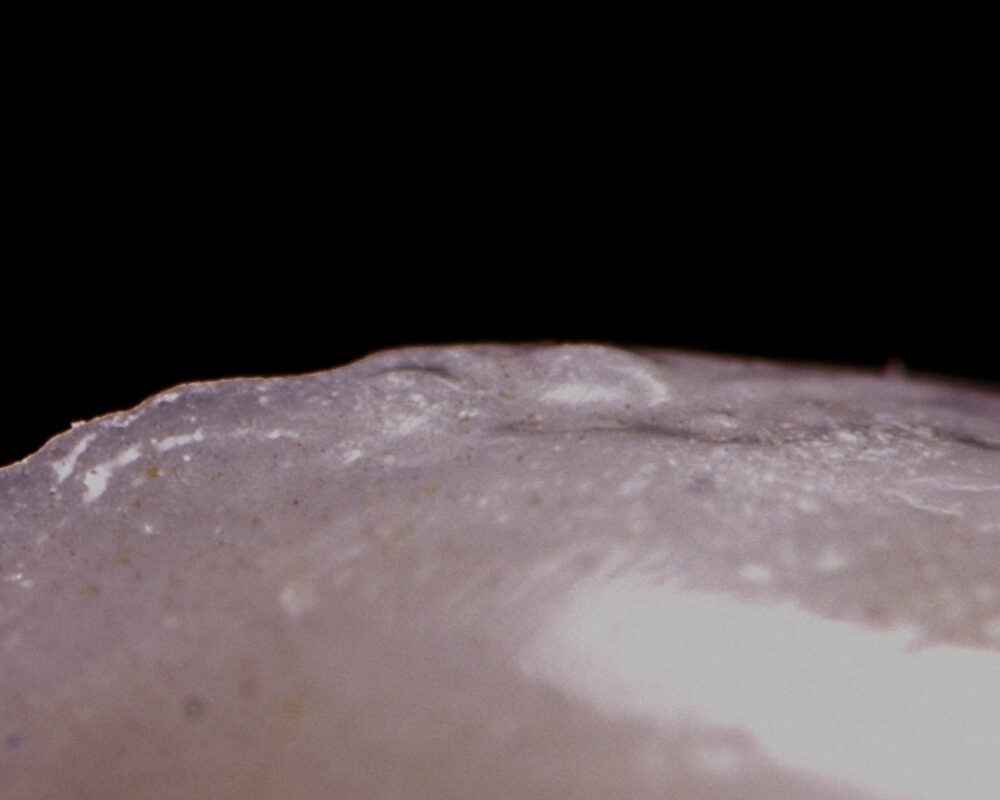
Instead of relying on one ceramic material to achieve every objective, Ceramic Bonding utilises multiple ceramic technologies in a layered biomechanical system. This mimics natural tooth enamel and dentine in the closest way possible.
The concept combines:
- ultra-high strength ceramic substructures
- minimally invasive preparation designs using feather edge techniques
- adhesive resin bonding
- micro-layered feldspathic ceramics
- advanced optical characterisation
Together these function as a single restorative complex that closely replicates natural tooth structure. Rather than producing restorations that simply look white and straight, the objective is to reproduce the optical behaviour and mechanical behaviour of a natural tooth.
Biomimetic Design
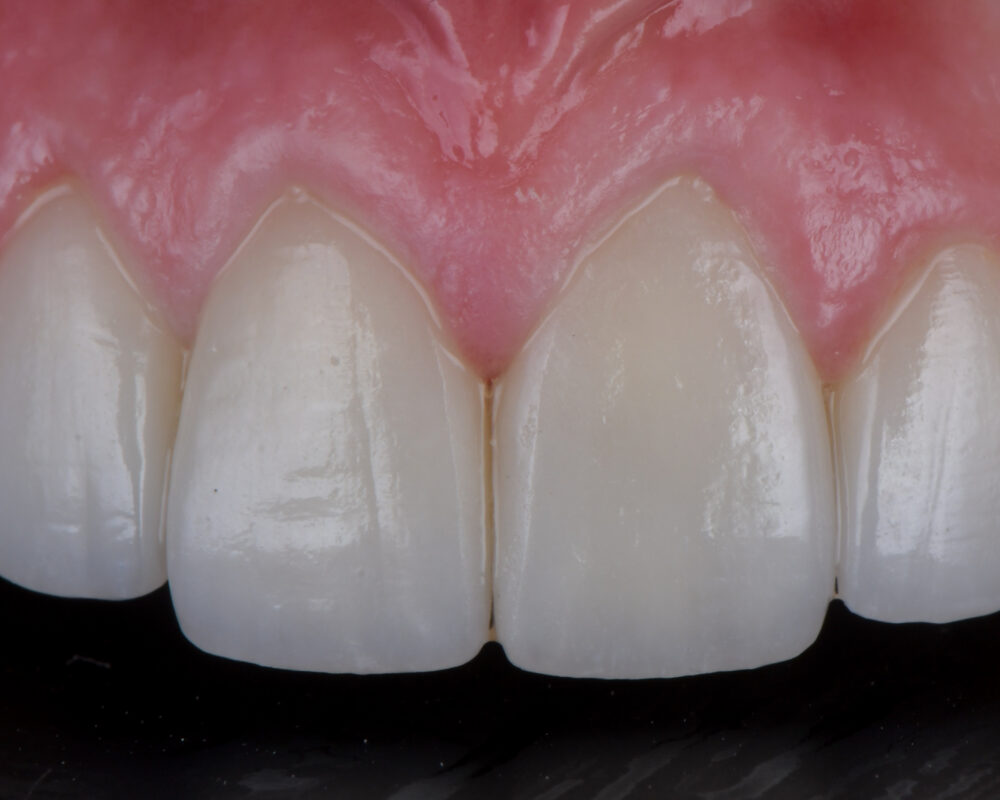
Natural teeth are not made of one layer. They are a complex structure consisting primarily of:
- enamel
- dentine
- enamel-dentine junction
- Pulp -nerve tissue
Each has different mechanical and optical properties. The enamel imparts rigidity, brightness and blue/grey effects. The dentine contributes flexibility, chroma and opacity. The enamel is naturally fixed to dentine via an extremely strong microscalloped connection. This allows light to penetrate through both substrates as one.
Ceramic Bonding follows this same biomimetic philosophy. We use the high strength core as the replacement for the dentine layer, imparting the opacity and chroma. Enamel and effects are layered over the core to replicate the enamel. The bond between the two substrates is via a high temperature furnace that melts both materials and creates a union between them,
Instead of creating a single block of ceramic, each component is designed to mimic the natural architecture of the tooth.
This improves:
- aesthetics
- stress distribution
- adhesive performance
- functional longevity
Adhesive Dentistry
A fundamental principle is that the ceramic is bonded, rather than simply cemented.
Modern adhesive resin technology allows the restoration to become intimately united with enamel.
This creates an integrated restoration-tooth complex where:
- enamel provides natural support
- the adhesive layer distributes stresses
- the ceramic reinforces the remaining tooth
When bonded predominantly to enamel, thin ceramic restorations can demonstrate remarkable clinical durability despite their minimal thickness. The success of ultra-thin veneers relies heavily on modern adhesive protocols in combination with conservative tooth preparation.
High Strength Core
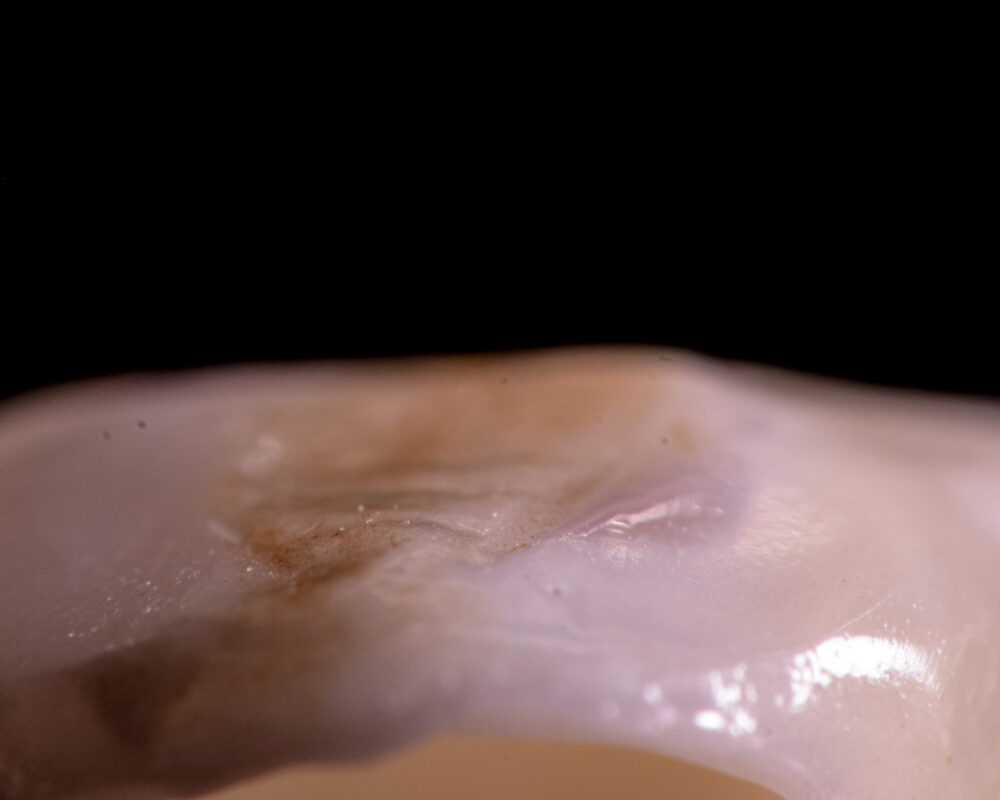
The underlying framework is produced from modern high-strength ceramics capable of supporting enormous functional loads.
Depending on the clinical indication this may include:
- lithium disilicate
- reinforced leucite glass ceramics
- advanced hybrid ceramics incorporating zirconia
These materials provide:
- excellent flexural strength
- high compressive resistance
- exceptional fracture resistance
- predictable longevity
- minimal restoration thicknesss ranging from 0.2mm
Microlayering
Where Ceramic Bonding differs from conventional ceramic/porcelain veneers is the artistic application of micro-layered feldspathic porcelain.
Instead of staining a monolithic restoration to resemble a natural tooth, microscopic layers of naturally occurring feldspathic ceramic are built individually over the stronger ceramic foundation.
Each layer recreates the optical phenomena seen in enamel.
These include:
- Internal translucency/opalescence – the blue/grey tones at the tips of the teeth
- Halo effects – the shape of the blue grey can appear as a halo
- Fluorescence – the internal refraction of light within the material and re-emittance as a light source. It creates the effect of a lifelike living tooth
- Depth – permitting light to pass through the tooth with translucent shades
- Mamelons – the developmental grooves that naturally occur on teeth
- Chroma gradation – the natural higher brightness as we move down the tooth. This copies the natural increase in enamel thickness we would expect on a tooth
- Character effects – warmth along the necks of teeth and nano-asymmetries assist teeth to look balanced in the smile
The result is a restoration that optically appears realistically as a natural tooth under different lighting conditions such as daylight (6000K) and interior lighting (3000K).
Minimal Intervention
One of the major objectives is maximum preservation of healthy tooth tissue.
Whenever possible, preparations remain within enamel.
This permits:
- improved bond strength
- greater longevity
- reduced sensitivity
- preservation of natural tooth biomechanics
- easier long-term maintenance
This approach leverages the same benefits as Lumineers, Feather Edge Veneers and Contact Lens Veneers, whilst allowing us to include microlayering to ensure we can control the aesthetic components.
Optical Excellence
Natural teeth possess significant visual complexity due to light interacting with the various layers.
Light entering enamel and dentine undergoes:
- Reflection
- Transmission
- Refraction
- Diffusion
- Fluorescence
Traditional ceramics reproduce only part of these effects as the materials can often be opaque or partially translucent. Replicating the exact prism structure of enamel is a major challenge and has only been recently overcome with the introduction of a layered biomechanical ceramic system used in Ceramic Bonding.
The addition of micro-layered feldspathic ceramics enables Ceramic Bonding restorations to reproduce:
- Depth
- Vitality with high fluorescence
- Chroma transition
- Natural brightness
- Realistic translucency
As a result, the restorations avoid the flat, opaque appearance commonly associated with conventional cosmetic dentistry.
Mechanical Performance
The process combines:
High tensile strength Resisting forces attempting to laterally pull or flex the restoration
High compressive strength Resisting biting and vertical chewing forces.
Fracture resistance Reducing the likelihood of ceramic failure during impact
Fatigue resistance Allowing the restoration to tolerate millions of chewing cycles over many years.
By integrating modern high-strength ceramics with adhesive bonding principles, the restoration behaves more like a reinforced natural tooth than a conventional porcelain covering. This is why it is a biomimetic and biologically respectful method to improve teeth.
Precision Laboratory Collaboration
Ceramic Bonding is available with ceramists that have developed and been trained in the procedure.
Every restoration is individually built through:
- Digi-logue planning
- Analogue model design
- Microscopic ceramic layering
- Optical calibration of shading, tones and custom colour charts
- Detailed surface morphology
The ceramist is an integral part of the clinical team, recreating subtle anatomical characteristics that cannot be produced through milling or digital design alone. Whilst they may not ben someone you meet during your dental journey – it is important to enquire as to who would work on your case so you can view their portfolio.
Clinical Indications
Ceramic Bonding is particularly suited to patients requiring:
- Smile makeovers
- Single front tooth colour matching
- Worn teeth
- Fractured teeth
- Crowded teeth
- Small teeth
- Spacing correction
- Tooth shape enhancement
- Colour improvement
- Replacement of ageing teeth
- Minimally invasive aesthetic rehabilitation
- Use alongside ceramic bridges, crowns, implants and onlays
The Philosophy
Ceramic Bonding is a philosophy of combining the latest advances in adhesive dentistry, material science and ceramic artistry.
By uniting:
- ultra-high strength ceramic foundations,
- feather-edge and contact-lens preparation designs,
- modern adhesive resin technology,
- and naturally occurring micro-layered feldspathic ceramics,
This allows restorations to be fabricated with a
- feather-edge veneers
- contact lens veneers
- ultra-thin lumineer-style restorations
the treatment aims to produce restorations that are exceptionally strong, highly conservative and as biologically and aesthetically lifelike as contemporary dentistry can achieve.
Rather than choosing between strength and beauty, Ceramic Bonding delivers both—creating restorations capable of withstanding functional demands while reproducing the depth, vitality and individuality of natural teeth to an exceptional standard.
FAQ’s
The key difference is the strength, aesthetics and longevity of the material. Ceramics are analogous to glass and are non-porous. This allows them to not stain and last up to 20 years. Composite resin is a white filling material that is very popular, but only lasts 5 years, due to the porosity and relatively lower strength. The term ‘bonding’ refers to the chemical adhesion of ceramic and composite resin in a way that is a feathered and extremely thin. The chemical union of these two materials is similar, however, the aesthetic stability is different for the above reasons.
Yes! In our clinic, the success rate for Ceramic Bonding is over 99%, with a longevity of 10-20 years. The large range in longevity is influenced by your home care routine and how regularly you engage with dentists and hygienists.
Feather-edge Veneers/Feather Veneers: This refers to a technique of using high strength, thin ceramics in smile makeovers and is a key aspect of modern veneer design that reduces the invasiveness of the procedure.
Contact Lens Veneers: This is an alternative name for feather edge veneers, utilising high strength pressable ceramics to create thin veneers.
Lumineers: This refers to an early phase of ceramic technology using cerinate ceramic to press thin veneers that do not require preparation of the teeth. The ceramic itself is aesthetically not as optimal as modern equivalents and the technique has evolved since Lumineers was introduced.
MAC Veneers: This is a development of ceramic technology using high strength lithium disilicate to design veneers. Similarly to Lumineers, modern ceramics are far superior in optical and strength properties making the MAC technique mostly obsolete in todays state of the art dentistry.
Our clinic provides all of the above techniques alongside our recommended Ceramic Bonding method and philosophy.
Here is a link to our smile gallery which shows various cases of Ceramic Bonding alongside classical veneer cases.