What is a Gummy Smile?
When smiling or speaking, there is a defined ‘normal’ amount of gum that shows to anyone looking. The average measurement of visible gum is based on your age.
For example, a 21-year-old would usually show the entire front tooth including up to 1mm of gum. This is only seen when smiling wide, and as we grow older the amount of gum/tooth showing reduces. This is in part due to the collagen in our faces wearing out and making things head south!
By the time we are middle aged, we would expect to show no gum at all with maybe 2-5mm of the front central incisor.
A gummy smile is a perceived excess of gum on show when speaking or smiling. A gum show of 4mm+ would be called excessive and can be of concern when smiling.
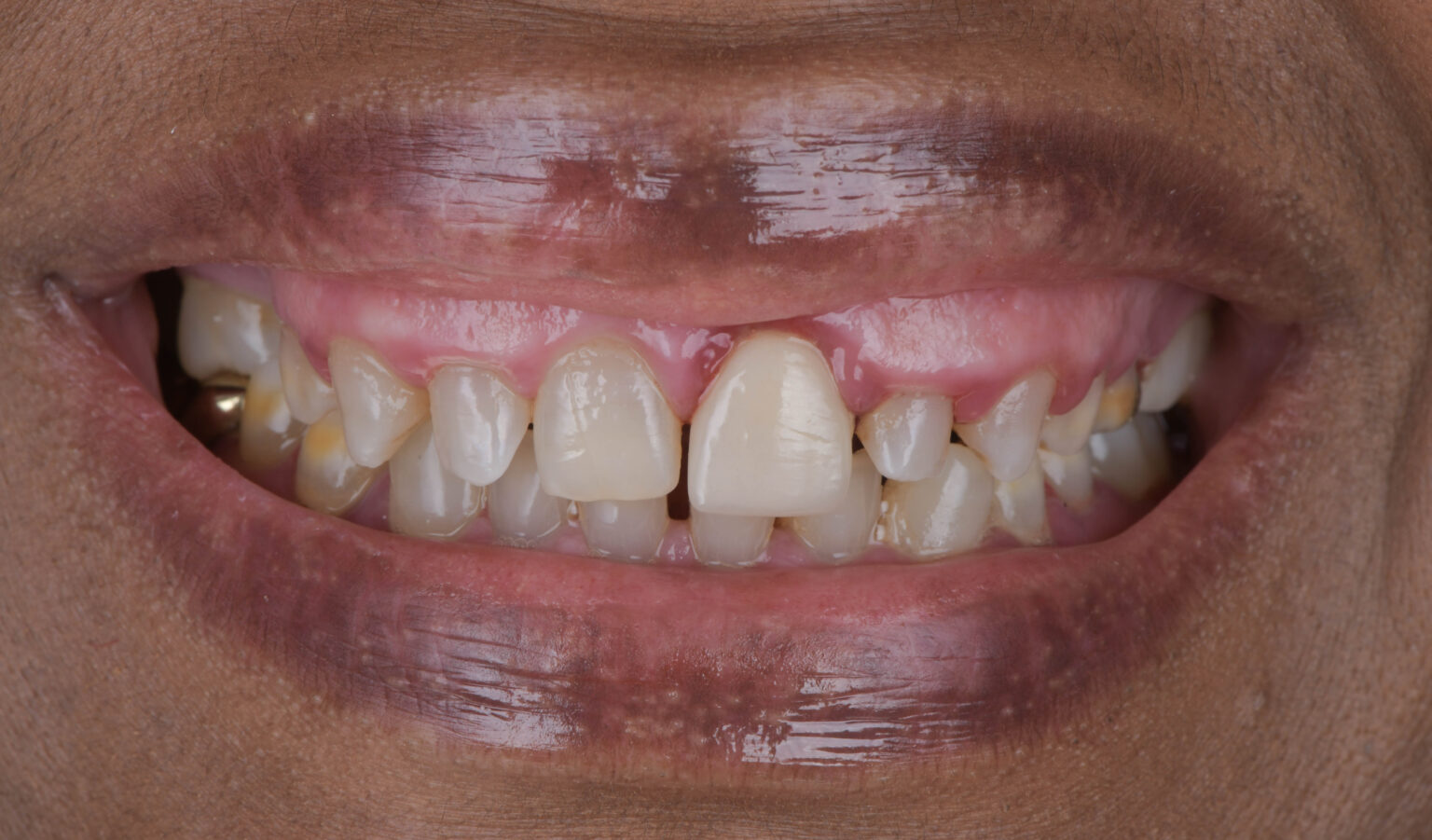
When we smile, we often focus on the white teeth themselves. In fact, the balance of pink tones to white is just as important as the teeth. Dentists sometimes call this ‘gingival progression’ or ‘pink aesthetics’.
Causes of a Gummy Smile:
Gummy smiles are often multifactorial, contributed by a combination of factors:
Bone volume
During growth of the upper and lower jaws, an excess of bone growth can create more gum show when smiling.
Tooth eruption
When adult teeth erupt between the ages of 6-12 (excluding wisdom teeth), some teeth can have an excess of gum tissue, failing to recede as we grow older. Conversely, if teeth have broken down or worn excessively, they can move downwards (over erupt) causing an excess of gum to show.
Lip movement
Hyperactive upper lip (orbicularis oris) can make the lip rise up more readily than usual.
Lip length
A shorter upper lip may result in a high smile line. Typically, most people’s lip length is 18-25mm from the base of the nose to the lower border of the upper lip.
Tooth position and size
Adverse positioning can give the optical appearance of excess gum display.
Treatment Options and Risk-Benefit Summary:
Gum contouring
A laser gum lift can assist cases of gummy smiles caused by tooth eruption issues. It can also be effective depending on the relative amount of biologic width available. This is a specific measurement that a cosmetic dentist can take to assess your case. This method may be combined with ceramic veneers and/or bonding to improve tooth proportions and position.
A typical maximum of 2mm gum lift is common but depends on the actual position of the gum in relation to the underlying bone. The only risk is of the gum relapsing to its old position, which can happen 30% of the time. Complete healing may take up to six months, and after this point the stability in the gum position can be definitively assessed. Bone contouring may be necessary after six months due to an unstable gum position. This would be to ensure the long-term health of the gum and tooth associated with it.
Surgical gum modification
A surgical gum lift is occasionally called a gummy smile makeover with bone contouring. It is a variation of the laser gum lift by modifying the shape of the bone beneath the gum, allowing a change beyond 2mm. It also increases the stability of the gum as it maintains the biologic width that preserves gum health following a gum lift.
Orthodontics
When moving teeth within the bone, the amount of bone and gum surrounding each tooth changes as the tooth moves, which can assist to reduce a gummy smile. This treatment can be slow, as pushing teeth upwards within the jaw takes time, patience, and various adjustments of the brace system to ensure accuracy and safety. If tooth malposition is a key factor in your case, it is a helpful option to consider.
Application of botulinum toxin
This involves using an injectable therapeutic agent to reduce the activity within the muscles that create a smile. Maintenance is required every 6 months and the upper lip is modified to reduce its movement during smiling, which can have an impact on the overall shape of the smile.
Surgical repositioning
This option is most relevant for a short upper lip or failure in the other options presented. This treatment is led by a medical doctor under local anaesthesia, frequently a specialist in maxillofacial and/or plastic surgery. A modification of the lip supporting muscles is involved to reduce the rise upwards. This can involve removal of part of the muscle. It is a medium term option as the muscle can reform with time.
Surgical impaction
Modification of the bone volume in the upper jaw, aiming to reduce the gum and associated bone height. If you have a genetic excess of bone in the upper jaw and other more minimally invasive options have not been successful, this would be the last option and widely considered the last resort.
This treatment is led by a medical doctor under general anaesthesia, often a specialist in maxillofacial surgery. The procedure physically reduces (excises) the volume of bone that is contributing to the gummy smile. The upper jaw is repositioned into a better alignment with the lips, so a complete reduction in the gummy smile may be expected. This option is permanent and irreversible.
Which option suits your smile?
Send us a photo for a free e-consultation with our patient care team.
Getting Gummy Smile Treatment in London
Now you are aware of what a gummy smile is, we can tell you how we fix them. We use a gummy smile treatment known as a gummy smile makeover (GSM).
This is a proprietary technique developed by us to manage the vast majority of gummy smiles, combined with three other treatments:
- 1Gum liftRaises and reshapes the gum line.
- 2Teeth contouringRefines the shape and length of the teeth.
- 3Teeth whiteningBespoke trays for whitening at home.
- 4Stain blastingA professional dental stain remover.
We are the originators of the method, having created and treated more cases than any other.
Patient case
Gummy smile makeover: before and after
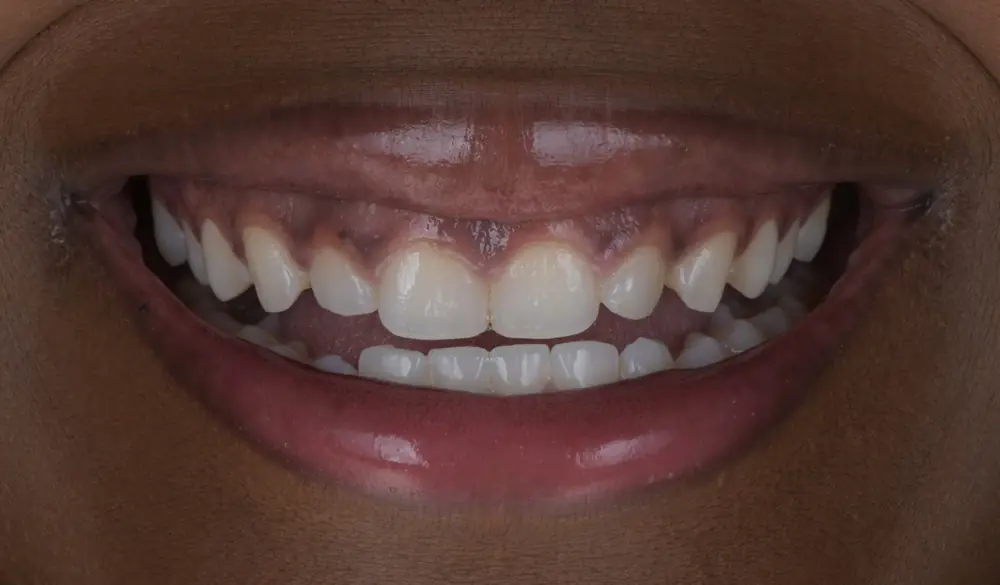
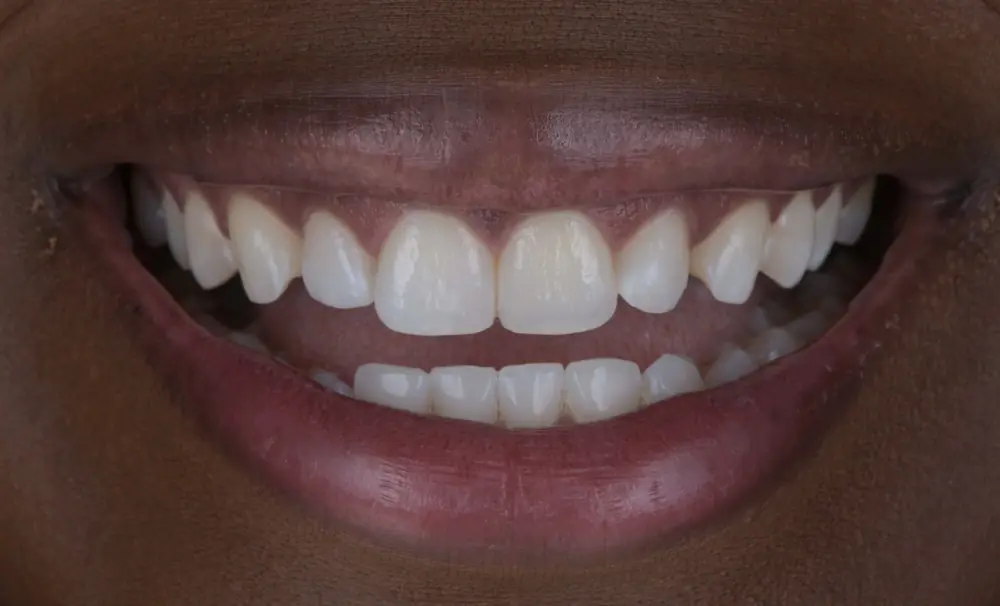

Every gummy smile makeover starts with a digital simulation of your smile, so you can see the result we are aiming for before any treatment begins.
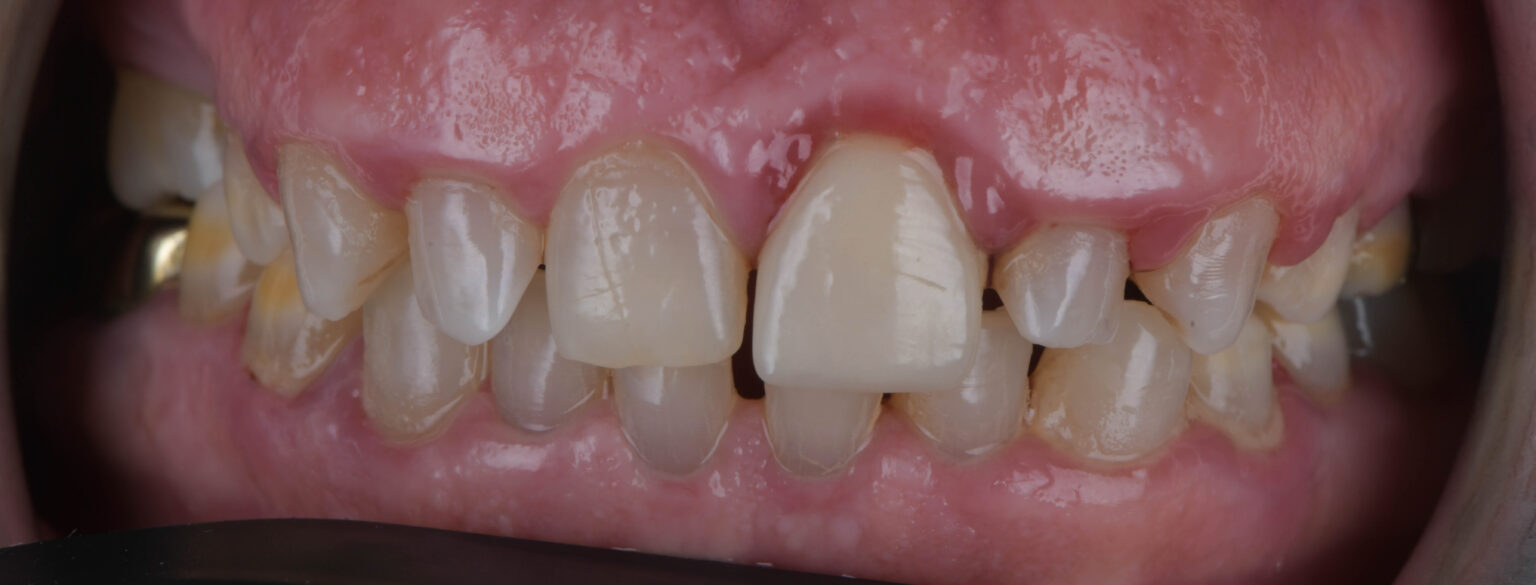
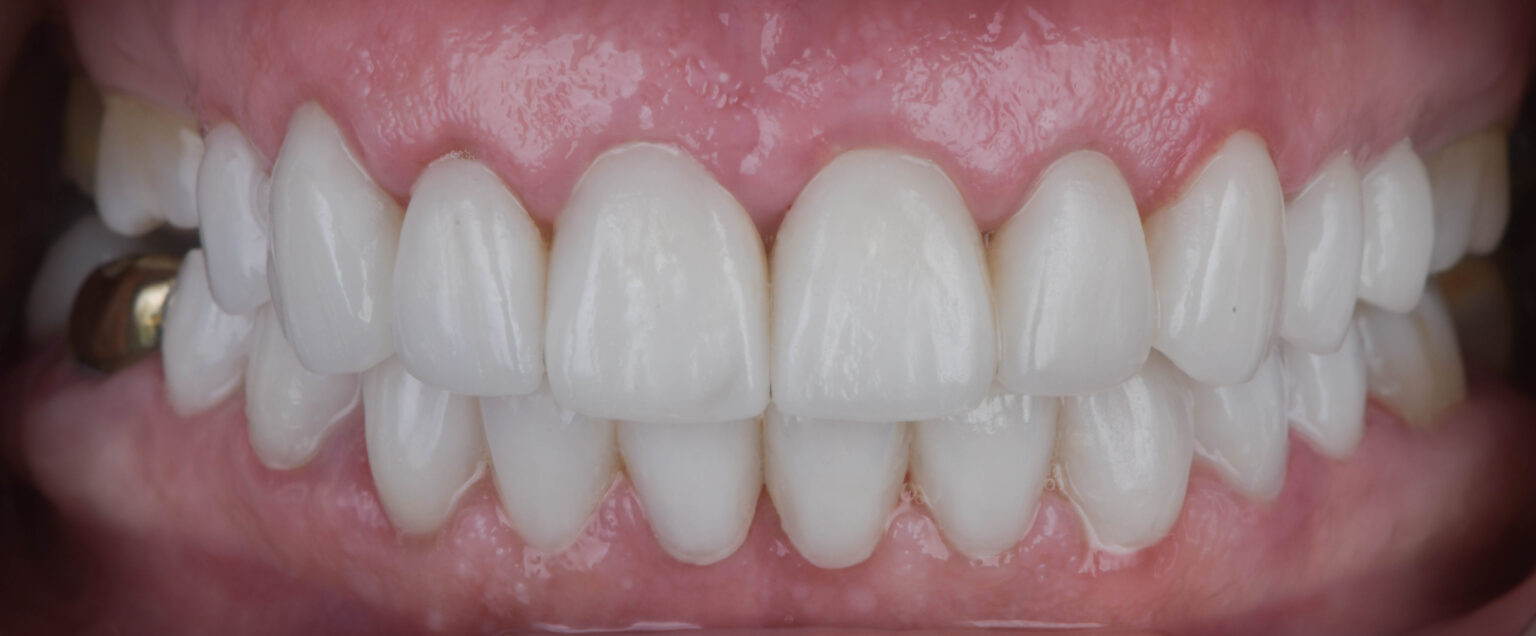
Some of our clients have more significant concerns with their teeth themselves, requiring cosmetic work after the gum lift. This can include ceramics, composite bonding or dental implants to further optimise the result. Pictured is an example of a complex case of gum disease, gummy smiles, gaps, and many cosmetic issues that were corrected with a gummy smile makeover with bone contouring followed by a full set of veneers/ceramics.
See more gummy smile resultsHide results


View the full gummy smile gallery
How a Gum Lift Is Performed
There are two main instruments used for performing a gum lift.
Laser gum lift
This method uses a diode laser or an electrosurgery unit. The heat generated by the laser cuts into the gum and raises it very precisely. It is minimally invasive and highly accurate.
Scalpel gum lift
This is the original method, using a 15C scalpel to reduce the gum. It has gone out of fashion because it is less accurate and tends to cause more bleeding.
Gum Lift with Bone Contouring
The other approach combines a gum lift with bone contouring, which allows the gum to be raised by more than 2 millimetres. Without bone contouring, the gums do not allow a lift of more than 2 millimetres. This method is very effective for more significant gum lifts and offers a comprehensive approach that balances and stabilises the gum, so there is less chance of it returning to its original position.
Although it may sound scary, it is a very straightforward procedure. It takes about 25% longer than a purely laser gum lift, and post-operative discomfort is minimal. The patient is numb during the procedure and feels nothing painful. Afterward there is only mild soreness on the day of the procedure, and the gum tends to return to its normal pink colour within a few days.
Gingival Smile Correction Aftercare
Immediate aftercare involves brushing very thoroughly, 3 times a day for 4 weeks.
Please note if you have had bone contouring with your gum lift we will ask you not to brush the area for 7 days and use a specific mouthwash instead. Following your treatment, we encourage you to return to the clinic for a review in four weeks’ time. This is to check the state of the healing and maturity of the gum. The maturity is a technical expression of how ‘settled’ or healed the gum is. This occurs for six months after the procedure, with the first month being most critical. The dentist will address any areas of concern and hopefully your gums will have not relapsed at all!
Laser gum lift only
Brush very thoroughly three times a day for about 2 weeks. During this time, angle the toothbrush into the area where the gum meets the tooth to keep it perfectly clean. This reduces the chance of relapse.
Gum lift with bone contouring
Do not brush at all for 7 days. Instead, use an antiseptic mouthwash containing chlorhexidine. The patient is then seen after 2 to 3 weeks to review healing, at which point the toothbrush is reintroduced.
Gum lifts are a relatively new treatment, with our data being collected over 10-15 years. In this time, we have seen remarkable stability in the gum, with less than 10% of our cases relapsing.
Get in Touch with The Best Cosmetic Dentist in London
Get in touch with us for an online consultation with our top cosmetic dentists in London.
Start with a free e-consultation
Send us a photo of your smile and our patient care team will be in touch.
FAQ’s
Will it hurt?
No! You will be feeling very numb on the day due to the local anaesthesia. You won’t feel anything painful other than some vibration and pressure.
How can I maintain the result?
Excellent home care is essential. This will be explained to you on the day, but brushing three times a day for four weeks is a good start.
To an extent, the gums will heal and rest to a position that is physiologically stable. We can only modify this to an extent, and this limit will be measured for you and indicated prior to the procedure.
How to fix a gummy smile?
We can fix your gummy smile in a single appointment that lasts around 90 minutes.
We start off by analysing your photograph, and this can be sent to us remotely. We show you a digital image so you can see what results you can expect, and suggest any alternative treatments as well.
If you decide to go ahead, we begin by conducting a dental health examination and ascertaining the causes of your gummy smile. The dentist will also gauge the level of risk of the gum condition relapsing with our treatment.
The procedure itself involves a local anaesthetic, which numbs the gum and lips for around 3 hours. The gum lift is painless after this and all you will hear is several beeps from the machinery and maybe a little pressure.
The risk of gums relapsing can be reduced by meticulous cleaning, and we start this for you by professionally cleaning and stain blasting your teeth and gums. The dentist will emphasise excellent cleaning, starting from the day of your treatment and continuing lifelong.
The final stages of the appointment involve tooth contouring. Sometimes shortening the tips of any teeth that may be at risk of becoming too long is planned at the outset, starting with your digital simulation, and again in person before the procedure.
The final step is to take moulds to fabricate bespoke whitening trays. Whitening is best performed at night over two weeks using a 16% carbamide peroxide solution. We meticulously make our own whitening trays using an exceptionally powerful positive pressure thermoformer.
After a gum lift, it is a good idea to delay whitening to give your gums a chance to begin healing. Seven days is the minimum advisory interval.
Gummy smile correction risks
No one knows what the future holds, but we feel biologically the procedure is performed with the most current knowledge at heart, and there is no physiological reason for complications after this. Just like any medical or dental procedure, unexpected complications are a possibility, although we feel they are unlikely.
The most significant risk is that the gum can relapse and grow back to its original position over the short term.
There can occasionally be scope to raise the gum again, but your dentist will assess if this is safe on a case-by-case basis. There are certain factors we have found can predict the risk of relapse, and these will be made known to you before you start the procedure.
There is a risk of the tooth structure beneath the gum being a different shade to your actual teeth. In reality, we find this is a rare concern, and in all cases after whitening, the colour has equalised.
As with most dental procedures, sensitivity is a common side effect. Occasionally, the root is exposed on one or more teeth, which can be more sensitive. This can be short or long term, and addressing it with sensitive toothpaste and/or calcium phosphate solution is one method of management.
Laser versus scalpel versus electrosurgery: which is best?
All three methods can give great results in the right hands. They are simply different ways of reducing the gum tissue, and all of them are effective. Some dentists prefer one over the others, but there are some differences between them.
Lasers: Lasers tend to be very minimally invasive, possibly the most minimally invasive option, as they use very gentle heat to reduce the gum tissue. There is a slight risk, however, because lasers can damage the eyes and other tissues. Great care must be taken in the surgical field and the dental chair to ensure that everyone is wearing protective glasses.
Scalpel: This is potentially the safest method but the least accurate. Because of the shape of the blade, it cannot always reach all the fine features of the teeth, so it is harder to create a gum lift that is as naturally shaped as possible. More adjustment tends to be required after healing.
Electrosurgery: Electrosurgery is similar to a laser but perhaps a little more aggressive in terms of the heat generated. As a result, you might expect a little more darkening of the gum, which becomes less red and more brownish in colour for the first 12 to 24 hours. This is called carbonisation. It is perfectly safe and resolves very quickly, but aesthetically you can expect the gum to look a little darker for the first 12 to 24 hours.
Bone contouring versus a laser gum lift?
A no bone gum lift is useful when you want a minor gum lift or a tweak on one or two teeth, perhaps on one side, where the change is less than 2 millimetres. This depends somewhat on your genetics and the reason you have a gummy smile, so it is not always possible to judge from a photograph. An assessment is often needed first.
A bone contouring gum lift is a surefire, comprehensive way to ensure the gums remain stable, even at the 2 millimetre level, and it is also more applicable for those who need a lift beyond 2 millimetres. Which one suits you best comes down to how much stability you would like and how much of a gum lift you are aiming for.
Specialist periodontist versus cosmetic dentist: which is best suited for this procedure?
Both a specialist periodontist and a cosmetic dentist can perform this procedure with high accuracy and excellent results. The outcome depends entirely on the knowledge base, skill set and experience of the clinician treating you.
Specialist periodontists generally train in crown lengthening, but they do not always have a cosmetic eye or the overall cosmetic planning for your case. A cosmetic dentist is not typically trained in gum lift procedures and may not have all the available methods at their disposal, but they have a very good eye for what will look best for your face shape.
You should consider both and look for a dentist who has a combined skill set of gum management and cosmetics.
Connective tissue tolerance: what is this?
Connective tissue tolerance is a method of assessing a gum lift case, developed by Dr Sahil Patel at Marylebone Smile Clinic. It aims to understand the amount of gum that can be removed without changing the bone profile, which allows more people to have gum lifts in a more minimally invasive way. It uses various factors, including treatment history, genetic history, face shape and tooth shape, to determine whether a gum lift can be performed without bone contouring.

Principal dentist at Marylebone Smile Clinic and an Accredited member of the British Academy of Cosmetic Dentistry. Sahil developed the gummy smile makeover and the connective tissue tolerance assessment used in our gum lift planning.
GDC number: 258353. Last reviewed: 3 November 2026