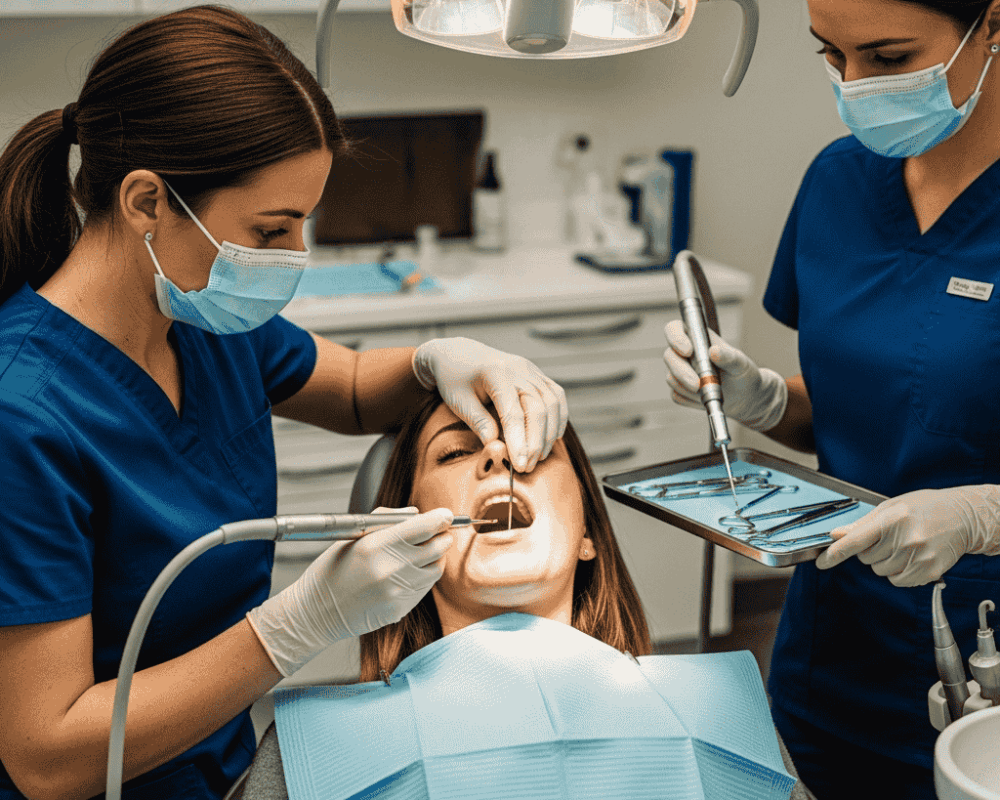
If you have been told you do not have enough bone in your upper jaw for dental implants, zygomatic implants may offer another route to fixed teeth. Instead of relying on the upper jawbone, they are anchored in the cheekbone (the zygomatic bone), which is usually denser and more stable. In many cases this means you can avoid lengthy bone grafting and have a fixed temporary set of teeth on the day of surgery or within a couple of days.
At our Harley Street clinic, Dr Sahil Patel starts with a 3D CBCT scan and a detailed assessment. Many patients told they have too little bone can still have fixed teeth with bone grafting or All-on-4 or All-on-6 implants, which Dr Patel places himself. Where zygomatic implants are the best option, an experienced local oral surgeon places them and Dr Patel restores your teeth, so you stay under our care throughout.
What Are Zygomatic Implants?
Zygomatic implants are longer than standard dental implants. They are placed through the back of the upper jaw and anchored in the cheekbone. They are usually combined with standard implants at the front of the jaw to support a full fixed bridge of upper teeth.
They are designed for the upper jaw only. If you have bone loss in the lower jaw, other options such as All-on-4 dental implants or a bone graft are usually considered.
| Standard implants | Zygomatic implants | |
|---|---|---|
| Where they anchor | Upper or lower jawbone | Cheekbone (zygomatic bone) |
| Bone needed in the upper jaw | Enough height and width to hold the implant | Can work with severe upper jaw bone loss |
| Bone grafting | Sometimes needed first | Often avoided |
| Typical use | Single teeth to full arch | Full upper arch |
| Surgery | Usually local anaesthetic | More complex, usually under conscious sedation |
Who Are Zygomatic Implants For?
Zygomatic implants are not an alternative to standard implants for everyone. They are usually considered if you have:
- Severe bone loss in the upper jaw, often after years of missing teeth, gum disease or wearing a denture
- Been told you are not suitable for standard implants
- Had a bone graft or sinus lift that has not worked, or grafting is unlikely to succeed
- A loose upper denture and want fixed teeth instead
If you have enough bone for standard implants, they remain the simpler option. Your CBCT scan shows exactly how much bone you have and which approach suits you.
Benefits of Zygomatic Implants
- Fixed teeth instead of a denture. Your teeth stay in and are cleaned in place.
- Often no bone grafting. Grafting can add many months to treatment, and zygomatic implants can avoid that stage in suitable cases.
- Teeth on the day in many cases. A fixed temporary bridge can often be fitted on the day of surgery or within 2 days.
- Fewer surgical stages than grafting followed by implants, for the right patient.
Risks and Limitations
Zygomatic implant surgery is more complex than standard implant placement, and it is important to understand what is involved:
- It is a longer procedure, usually carried out under conscious sedation
- Swelling and bruising can be more noticeable than after standard implants, and recovery takes longer
- Because the implants pass close to the sinuses, sinus problems are a possible complication
- As with any implant, there is a risk of infection or the implant failing to integrate
- The overall treatment typically costs more than standard implant treatment
Careful 3D planning reduces these risks, and we will explain what applies to you at your consultation.
How Zygomatic Implant Treatment Works
- Consultation and 3D CBCT scan at our clinic. Dr Patel assesses your bone, sinuses and bite and explains every option, including treatments he can provide himself.
- Planning. Your implants and new teeth are planned digitally before surgery.
- Surgery. If zygomatic implants are the best route, an experienced local oral surgeon places them in the cheekbone, usually alongside standard implants at the front of the jaw.
- Teeth on the day. In suitable cases, a fixed temporary bridge is attached on the day of surgery or within 2 days.
- Healing. You follow a soft diet while the implants heal, with review visits to check progress.
- Final bridge. Once healing is complete, Dr Patel restores your teeth with your permanent bridge.
Recovery After Zygomatic Implants
Expect swelling, bruising and some discomfort for the first week or so, managed with painkillers and aftercare advice. Most people need 2 to 5 days off work. You will eat soft food while the implants heal and attend review visits so we can check your healing. Our dental implant aftercare guide explains how to look after your implants.
How Much Do Zygomatic Implants Cost?
Zygomatic implants start from £3,495 per implant. Because zygomatic treatment involves a full arch, more complex surgery and detailed planning, the total cost is usually higher than standard implant treatment. Your exact fee is set out in a written treatment plan after your consultation.
You can spread the cost with 0% finance over up to 24 months, or longer terms of up to 60 months with interest, subject to status. See our dental implant cost guide.
Alternatives to Zygomatic Implants
- Bone grafting or a sinus lift, followed by standard implants
- All-on-4 or All-on-6 dental implants, using angled implants to make the most of the available bone
- Implant-supported dentures, where there is enough bone for a smaller number of implants
- A conventional denture
Frequently Asked Questions
How much do zygomatic implants cost in the UK?
Prices vary widely because each case is different. At Marylebone Smile Clinic, zygomatic implants start from £3,495 per implant, and your exact fee is confirmed in a written treatment plan after your 3D scan.
How long do zygomatic implants last?
With good care, regular check-ups and hygiene visits, zygomatic implants are designed to be a long-term solution. As with any implant, longevity depends on your healing, oral hygiene and general health.
Are zygomatic implants painful?
The surgery is usually carried out under conscious sedation, so you should not feel pain during it. Afterwards, expect swelling and discomfort, which are managed with painkillers. Recovery takes longer than for standard implants, and most people take 2 to 5 days off work.
Can I have zygomatic implants after a failed bone graft?
Often, yes. This is one of the most common reasons zygomatic implants are considered.
Will I be without teeth during treatment?
In many cases, no. A fixed temporary bridge can often be fitted on the day of surgery or within 2 days.
Can zygomatic implants be used in the lower jaw?
No. Zygomatic implants anchor in the cheekbone, so they are only used for the upper jaw.
Book a Zygomatic Implant Consultation
If you have been told implants are not possible for you, it is worth getting a second opinion. Book a consultation at our Harley Street clinic for a 3D scan and an honest assessment of every option, from bone grafting and All-on-4 to zygomatic implants. Find out more about full mouth dental implants and dental implants in London, or call us on 020 7126 8526.
Told you cannot have implants?
Your consultation includes a 3D CBCT scan, a written treatment plan and a fixed quote.

Lead implant dentist at Marylebone Smile Clinic and an Accredited member of the British Academy of Cosmetic Dentistry. Sahil plans and places implants, bone grafts and gum grafts at our Harley Street clinic.
GDC number: 258353.