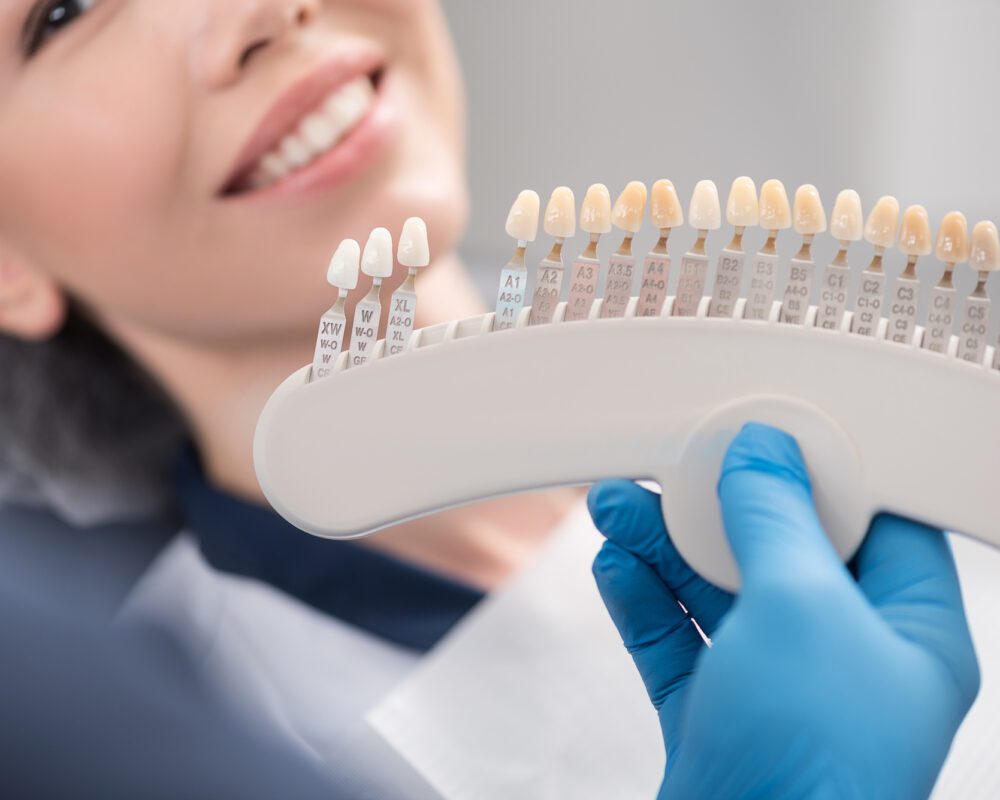
Ceramic dental implants, usually made from zirconia, are a metal-free alternative to titanium implants. They are white rather than grey, and some patients choose them because they would prefer to avoid metal. At our Harley Street clinic, Dr Sahil Patel will talk you through the honest pros and cons of ceramic and titanium implants, and the metal-free options available for the parts of your implant you can see.
What Are Ceramic (Zirconia) Implants?
A dental implant is a small post placed in the jawbone to replace the root of a missing tooth. Most implants are made from medical-grade titanium. Ceramic implants do the same job but are made from zirconia (zirconium dioxide), a very hard, tooth-coloured ceramic.
“Ceramic implant” and “zirconia implant” usually mean the same thing. Zirconia is the ceramic used for implant fixtures.
Ceramic vs Titanium Implants
| Titanium implants | Ceramic (zirconia) implants | |
|---|---|---|
| Material | Medical-grade titanium | Zirconia ceramic |
| Colour | Grey (hidden under the gum and crown) | White |
| Research history | Decades of clinical research | Shorter track record |
| Flexibility of design | Wide range of shapes, sizes and connections | More limited range |
| Strength | Very strong and resistant to fracture | Hard, but more prone to fracture in some situations |
| Repairs and parts | Widely available parts | Fewer component options |
| Metal-free | No | Yes |
Why Do People Choose Ceramic Implants?
- They prefer to avoid metal. Some patients would rather have a completely metal-free mouth.
- Appearance. Zirconia is white, so there is no risk of a grey edge showing through very thin gum.
- Concerns about titanium. Some patients ask about titanium sensitivity. Titanium alloys that are used in medicine and dentistry are extremely biocompatible and there are very few cases of true hypersensitivity.
The Limitations of Ceramic Implants
Ceramic implants are used much less often than titanium implants. The main reasons are:
- Fewer design options. There is a smaller range of shapes, sizes and connections, which limits where they can be used.
- Risk of fracture. Zirconia is very hard but less forgiving than titanium in some situations.
- Shorter track record. Titanium implants have decades more clinical research behind them.
For most patients, a titanium implant remains the most predictable option. Dr Patel will only recommend a treatment that suits your bone, bite and goals.
Metal-Free Options on a Titanium Implant
If your main concern is what you can see, there are metal-free options for the visible parts of your implant. At Marylebone Smile Clinic:
- Abutments (the connector between the implant and the crown) are custom made in titanium or zirconia
- Crowns are made from zirconia layered with porcelain, colour matched to your natural teeth
A zirconia abutment and crown on a titanium implant can give a natural, tooth-coloured result, even where the gum is thin.
Are Ceramic Implants More Biocompatible?
Both titanium and zirconia are biocompatible, meaning they are well tolerated by the body and the bone bonds to them. We do not describe either as “healthier” than the other. If you have a specific medical concern, such as a suspected metal allergy, tell us at your consultation so we can discuss it properly.
How Much Do Ceramic Implants Cost?
Our single implant price starts from £3,495 per tooth, including your consultation, 3D CBCT scan, implant, custom abutment (titanium or zirconia) and a zirconia-layered porcelain crown, with a 5-year guarantee. See our dental implant cost guide.
Which Implant Is Right for You?
Every implant starts with a consultation and a 3D CBCT scan, so Dr Patel can assess your bone and gums and explain the options that suit you. For titanium implants we use Straumann Reference and Southern Implants, and for ceramic implants we use Zeramex. Read our guides to Straumann dental implants and dental implant brands.
Frequently Asked Questions
Which is better, titanium or ceramic implants?
For most patients, titanium implants are the more predictable choice because of their longer research history, wider range of designs and lower risk of fracture. Ceramic implants are a metal-free option that may suit some patients. Your dentist will recommend what suits your case.
How long do ceramic implants last?
Ceramic implants have a shorter clinical track record than titanium, so there is less long-term data. With good care and technique, any implant can last for many years.
Are zirconia implants the same as ceramic implants?
Usually, yes. Zirconia is the ceramic material used to make ceramic implant fixtures.
Can I have a metal-free implant crown?
Yes. Our implant crowns are zirconia layered with porcelain, and abutments can be made in zirconia.
Are ceramic implants more expensive?
Ceramic implants often cost more than titanium implants. Your exact fee is confirmed in your written treatment plan.
Book an Implant Consultation
If you are interested in metal-free options, book a consultation at our Harley Street clinic. You will get a 3D scan, an honest discussion of ceramic and titanium implants, and a written treatment plan with your full costs. Find out more about dental implants in London, or call us on 020 7126 8526.
Book an implant consultation
Your consultation includes a 3D CBCT scan, a written treatment plan and a fixed quote.

Lead implant dentist at Marylebone Smile Clinic and an Accredited member of the British Academy of Cosmetic Dentistry. Sahil plans and places implants, bone grafts and gum grafts at our Harley Street clinic.
GDC number: 258353.